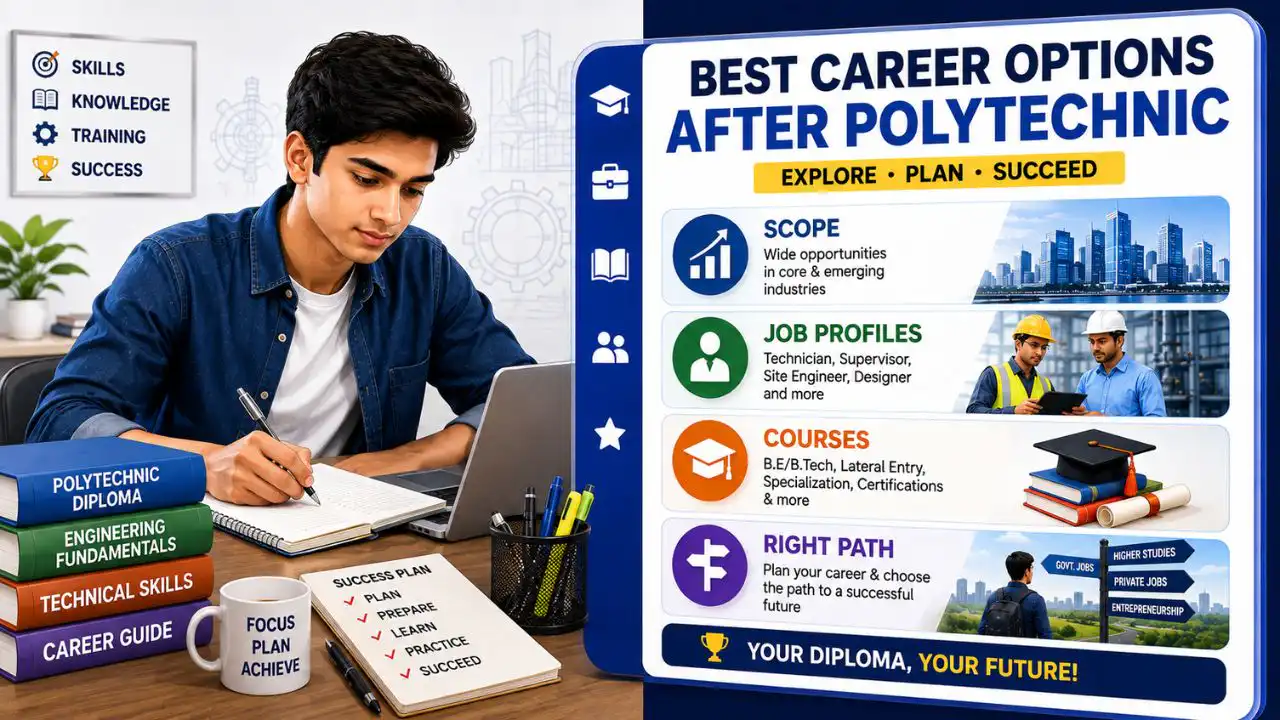
After completing a polytechnic diploma, students either look for a job or prepare for government recruitment. Some students even continue with engineering studies while some build skills for a specialised career. The right career choice depends on the diploma branch, academic performance, financial situation and long-term plans. A Mechanical Engineering diploma can give opportunities in manufacturing and production roles, while Computer Engineering can open opportunities for roles in software industry and IT-related fields.
If you have also completed your polytechnic diploma and are wondering what to do now, then this guide will help you find out the main career options, job profiles, higher study routes and skills worth developing after a diploma.
Table of Contents
What Can You Do After Polytechnic?
There are several options available after completing a diploma. Some students after completing their diploma start working immediately, while others continue their education through lateral entry into an engineering degree. Some also seek government jobs as another option, Meanwhile, apprenticeships can also provide practical experience before moving into a permanent role.
Higher Studies After Polytechnic
One of the most common choices after a diploma is pursuing B.Tech or B.E. through lateral entry. If a student chooses higher studies, he/she can generally enter an engineering degree programme at an advanced stage instead of starting from the first year. The exact admission rules vary by state and institution. The admission process generally involves entrance examinations, merit-based selection or state-level counselling.
Jobs After Polytechnic
A diploma can qualify candidates for various entry-level technical positions, depending on their branch and the employer’s requirements. Mechanical diploma holders may find opportunities in manufacturing, production, maintenance and quality-related work. Civil diploma holders can explore construction, surveying, site supervision and infrastructure projects.
Electrical diploma holders can work in areas connected with electrical maintenance, power systems, equipment and industrial operations. Computer and IT-related diploma holders may find roles involving technical support, hardware, networking, web development or other technology functions.
Job titles and responsibilities differ between companies, so the qualification alone does not determine the role. Practical skills, internships and experience can become increasingly important as your career progresses.
Popular Job Profiles After Polytechnic
The job profile you can apply for depends largely on your diploma specialisation.
Junior Engineer: Diploma holders can find Junior Engineer opportunities in certain organisations and recruitment processes, subject to the required eligibility. The role can involve technical supervision, maintenance, site work or project-related responsibilities.
Technician: Technicians work with equipment, machinery, electrical systems or other technical operations. The exact duties depend on the industry and diploma branch.
CAD Technician: Civil and Mechanical diploma holders with good computer-aided design skills can explore CAD-related roles. These jobs involve preparing and modifying technical drawings and designs.
Site Supervisor: Civil diploma holders may work on construction sites, helping monitor work, materials, measurements and day-to-day activities.
Maintenance Technician: Mechanical and Electrical diploma holders can work in maintenance teams that handle machinery, electrical systems and industrial equipment.
Technical Support Executive: Candidates from computer-related backgrounds can explore technical support and troubleshooting roles, depending on their skills.
These are starting points rather than fixed career paths. Experience and additional qualifications can help professionals move into more specialised positions.
Government Jobs After Polytechnic
Government employment is an important option for diploma holders in India. Several recruitment examinations include technical posts where a diploma in the relevant engineering discipline is accepted. The exact opportunities depend on the organisation and recruitment notification. Posts may be available in areas such as railways, public sector organisations, electricity departments, defence-related establishments and state government departments.
Some technical recruitment processes include written examinations followed by document verification, skill tests or other selection stages. Do not rely on an old notification while applying. Eligibility conditions can change between recruitment cycles, and the required diploma branch may be specified for a particular post. If government employment is your target, keep checking official recruitment notifications and prepare according to the exact examination pattern.
Apprenticeship After Polytechnic
An apprenticeship can be a useful option for diploma holders who want practical industry experience. Instead of spending all your time studying theory, an apprenticeship allows you to work in a professional environment and understand how technical knowledge is applied.
For a fresh diploma holder, this experience can also make the transition from college to employment easier. Depending on the organisation, apprenticeships can be available in manufacturing, engineering, power, infrastructure and other technical sectors. An apprenticeship should not be treated as a guaranteed permanent job. Its value is mainly in gaining workplace exposure, developing practical skills and understanding how an industry operates.
Career Scope by Polytechnic Branch
The career options after polytechnic are closely connected to your specialisation.
Computer Engineering and Computer Science
Computer-related diploma holders can explore areas such as technical support, networking, web development, software testing and IT operations.
Those interested in software careers can strengthen their profile with programming languages, databases, web technologies and practical projects.
A diploma alone may not be enough for more specialised software positions, so additional skills or a degree can be useful.
Mechanical Engineering
Mechanical diploma holders can work in manufacturing, production, maintenance, quality control and machine-related operations.
Knowledge of CAD software, CNC machines, industrial processes and quality systems can help candidates build a stronger technical profile.
Civil Engineering
Civil diploma holders can explore construction, surveying, site supervision, infrastructure and related technical roles.
Skills in AutoCAD, surveying tools, estimation and project documentation can be useful for entry-level positions.
Electrical Engineering
Electrical diploma holders can find opportunities in maintenance, power systems, electrical equipment, industrial operations and related areas.
Practical knowledge of electrical safety, wiring systems, control equipment and maintenance procedures can support career growth.
Electronics and Communication Engineering
This branch can lead towards technical roles involving electronics, communication equipment, testing, maintenance and related systems.
Candidates can also develop skills in embedded systems, networking, electronics testing and other specialised areas.
Skills to Develop After Polytechnic
Your diploma gives you technical education, but employers may look for more than a qualification.
Practical knowledge can make a major difference, especially for freshers. Try to become comfortable with the software, tools and equipment commonly used in your field.
Communication skills also matter during interviews and at work. You should be able to explain a technical problem clearly and discuss your work without relying entirely on textbook definitions.
Internships, apprenticeships and personal projects can add useful experience to your resume. For computer-related fields, projects can demonstrate what you can actually build. For engineering branches, practical training and industry exposure can show how well you understand real workplace requirements.
Final Words
A polytechnic diploma gives you more than one career route. You can start working, pursue an apprenticeship, prepare for government recruitment or continue towards an engineering degree through lateral entry. Before choosing your next step, compare the eligibility requirements, course costs, career opportunities and time involved. Most importantly, choose a career that matches the kind of work you actually want to do.