Choosing a polytechnic college is not only about the course and admission process. For a three-year diploma, the campus environment also matters. Students spend a significant part of their time in classrooms, laboratories, workshops, libraries and practical training areas. Government Polytechnic Ambikapur is a government technical institute located in Namnakala, Ambikapur, in Chhattisgarh’s Surguja district. The institute offers diploma programmes in Civil Engineering, Computer Science and Engineering, Electrical Engineering, Mechanical Engineering, Mining Engineering, and Electronics and Telecommunication Engineering.
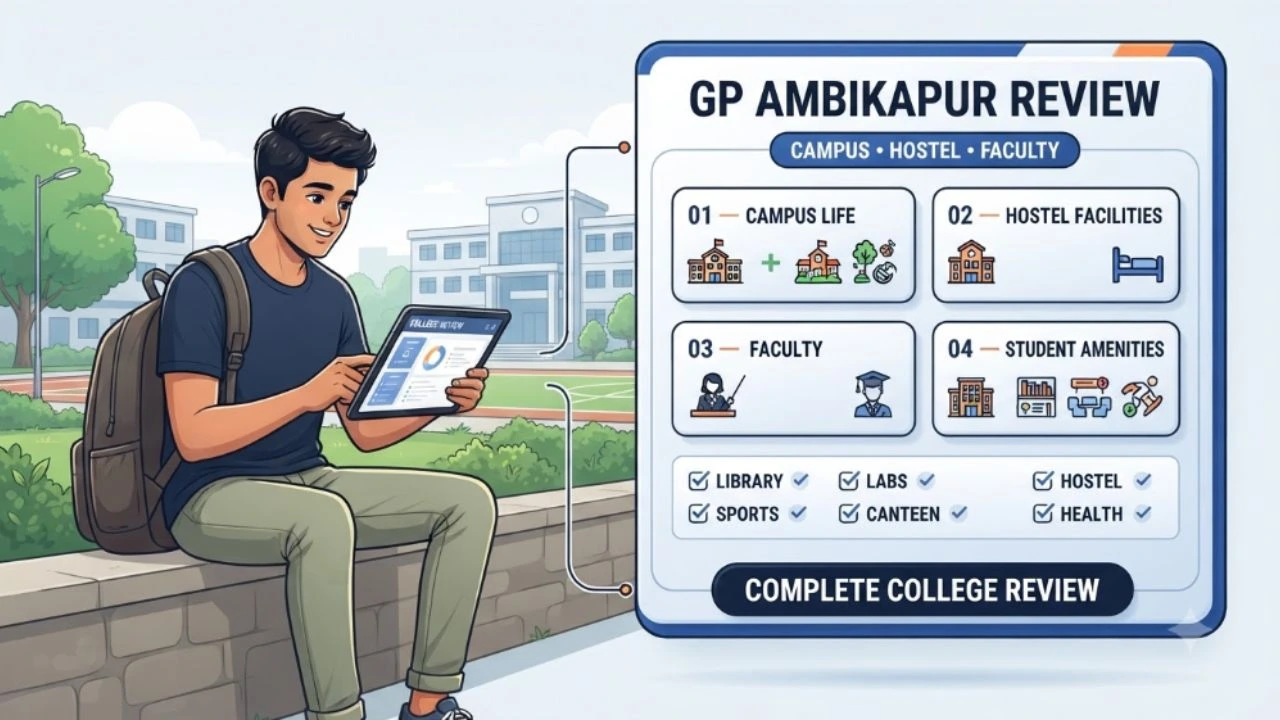
For students considering the college in 2026, factors such as laboratory facilities, teaching staff, hostel availability, library resources, campus environment and day-to-day amenities deserve attention. A college may have a suitable branch, but the overall learning environment can also influence the diploma experience.
Table of Contents
Government Polytechnic Ambikapur Campus
Government Polytechnic Ambikapur has a campus designed around technical education. The academic environment is focused mainly on classroom learning, practical work, workshops and laboratory sessions rather than the type of facilities usually associated with large private universities.
A polytechnic student spends considerable time working with equipment and completing practical assignments. Therefore, laboratories, workshops and access to technical resources are more relevant than having a large number of recreational facilities.
The institute has departments covering several core engineering disciplines. This gives students an opportunity to study in a technical environment alongside learners from Civil, Mechanical, Electrical, Computer Science, Mining and Electronics and Telecommunication branches. The location in Ambikapur also makes the college relevant for students from Surguja and nearby areas who prefer to pursue a diploma within the region.
Academic Departments and Courses
Civil Engineering focuses on construction, surveying, building materials, infrastructure and related technical work. Practical exposure is an important part of the programme because civil engineering requires students to understand how theoretical concepts are applied at project sites.
Computer Science and Engineering covers areas such as programming, computer systems, databases and software fundamentals. Students interested in IT-related careers can use the diploma as a foundation for employment or further studies.
Electrical Engineering deals with electrical machines, circuits, power systems, installations and maintenance. The branch has applications across industrial and electrical service environments.
Mechanical Engineering covers machines, manufacturing processes, workshop practices and maintenance. Students who prefer mechanical systems and production-related work may find this branch more suitable.
Mining Engineering provides specialised technical education related to mining operations and mineral extraction. This branch has a more specific career direction compared with broader engineering disciplines.
Electronics and Telecommunication Engineering covers electronic circuits, communication systems, devices and related technologies. The choice of branch is therefore one of the most important decisions for an applicant. Campus facilities matter, but the course itself will shape much of the student’s academic experience.
Laboratory and Practical Training
Practical learning is central to diploma education. Government Polytechnic Ambikapur has separate departments for its engineering disciplines, allowing practical training to be organised around the requirements of each course.
A Civil Engineering student, for example, needs practical exposure related to surveying, construction materials and testing. Mechanical students require workshop-based learning and machine-related practice. Electrical students work with electrical systems and equipment, while Computer Science students need access to computing facilities for programming and technical assignments.
For a prospective applicant, this is worth checking during a campus visit. Ask about laboratory hours, practical classes, equipment availability and how frequently students work on projects. These details can provide a clearer picture than simply looking at the number of laboratories listed by a college.
Faculty and Teaching Environment
At Government Polytechnic Ambikapur, teaching is organised through individual engineering departments. This allows students to interact with faculty members who specialise in their respective technical areas.
The teaching approach in a polytechnic generally combines classroom instruction with laboratory and workshop work. Subjects that appear difficult in textbooks can become easier to understand when students see the equipment or practical application associated with them.
However, the experience can vary from department to department and from one student to another. Faculty availability, teaching style, practical guidance and student interaction all contribute to how useful classroom learning becomes.
Students considering admission should therefore avoid judging the entire college only through general reviews. A better approach is to speak with current students from the particular branch being considered.
Library and Learning Resources
A technical diploma requires regular study outside classroom hours. Students need textbooks, reference material, laboratory manuals and other academic resources throughout the semester.
Students should also consider how much independent learning they will need to do. Engineering education has changed considerably with online technical courses, documentation, coding platforms and digital learning resources.
For Computer Science students, for instance, learning programming outside the classroom can be just as important as attending lectures. Mechanical, Civil and Electrical students can also benefit from additional technical learning and software skills beyond the prescribed syllabus.
Hostel Facilities
Hostel availability is an important consideration for students coming from outside Ambikapur. Government Polytechnic Ambikapur has hostel facilities associated with the campus, making accommodation an option for students who cannot travel from home every day. Hostel availability, room allocation and other arrangements can depend on the academic session and available capacity.
Before joining, applicants from other districts should check the current hostel application procedure, number of available seats, charges, room arrangements and rules. It is also worth asking whether separate accommodation arrangements are available for male and female students. For students travelling from distant areas, hostel availability can make a significant difference to the overall cost and convenience of studying.
Student Amenities
Student amenities at a government polytechnic are usually focused on academic requirements and essential campus needs.
Classrooms, laboratories, workshops, library access and departmental facilities form the core of the student experience. Other facilities may include areas for administrative work, student activities and day-to-day campus requirements.
Students who are looking for a large university-style campus with extensive commercial facilities, multiple food courts or a wide range of entertainment options may find the experience different from that of a private university.
That is not necessarily a disadvantage. For a diploma student, access to practical training and a focused academic environment can be more useful than a long list of non-academic amenities.
Campus Life at Government Polytechnic Ambikapur
Campus life is generally shaped by classes, practical sessions, workshops, examinations, assignments and interaction with classmates.
Students from different branches study within the same institution, which creates opportunities for interaction beyond individual departments. Projects and technical activities can also encourage students from different disciplines to work together.
For example, a technical project might combine programming knowledge with electrical or mechanical concepts. Such experiences can help students understand how different engineering fields connect in real workplaces.
The college environment may feel quieter and more focused than a large private university. Students who prefer a straightforward academic setting may appreciate this.
At the same time, students should be prepared to take initiative. Building technical skills, participating in projects and improving communication abilities often requires effort outside scheduled classes.
Workshops and Technical Exposure
Workshop training is one of the areas where diploma education differs from a purely academic programme.
Mechanical and related engineering students can benefit from practical exposure to tools, machines, manufacturing processes and workshop practices. Civil students can develop familiarity with surveying and construction-related activities, while Electrical and Electronics students work with systems relevant to their respective fields.
Practical exposure becomes more valuable when students understand why a particular process is being performed rather than simply completing it for attendance.
Industrial visits, internships and project work can add another layer of experience. Availability can differ by department and academic year, so students should check the current arrangements with the college before relying on a particular facility.
Student Activities and Overall Environment
A college experience is not limited to lectures. Technical competitions, project work, cultural activities, sports and student events can contribute to campus life.
The scale of such activities can vary from one academic session to another. Students interested in these areas should speak with current students and look at recent college updates rather than relying on old reviews.
The overall environment at a government polytechnic tends to remain relatively focused on education and technical training.
For many students, this can be an advantage. There are fewer distractions, and the three-year diploma can be used to build practical skills before entering employment or moving into higher education.
Location and Accessibility
Government Polytechnic Ambikapur is located in Namnakala, Ambikapur.
For students living in Ambikapur or nearby parts of Surguja, the location can make regular commuting more manageable. Those coming from farther districts should consider transportation and accommodation before finalising their college preference.
The total cost of education is not limited to tuition. Daily travel, food, hostel accommodation, books and other expenses can add to the budget.
A college that appears inexpensive on paper may become more expensive if a student has to travel long distances every day. This is why location should be considered alongside fees and academic facilities.
Is Government Polytechnic Ambikapur Good for Diploma Students?
Government Polytechnic Ambikapur can be considered by students looking for government diploma education in Chhattisgarh, particularly those interested in core engineering branches.
Its range of programmes covers major areas such as Computer Science, Civil, Mechanical and Electrical Engineering, along with specialised options including Mining and Electronics and Telecommunication.
The college can be a practical choice for students who value technical education without the cost structure associated with many private institutions. However, applicants should compare the particular branch, laboratory facilities, hostel arrangements and current admission details before making a final decision.
There is also no single answer to whether the college is suitable for everyone. A Computer Science applicant may evaluate the institute differently from a Mining or Civil Engineering applicant.
What Students Should Check Before Admission
A campus visit can answer several questions that online information cannot.
Check whether the laboratories have the equipment required for your branch. Ask students how often practical classes are conducted and whether faculty members are accessible when help is needed.
If hostel accommodation is required, ask about current availability, room arrangements, fees, food and hostel rules.
It is also useful to understand the college’s recent academic environment, internship opportunities and placement activity for the particular branch.
Most importantly, compare the college with other government polytechnics available through the same admission process. Branch availability, location, fees and seat competition can all influence the final decision.
Final Review
Government Polytechnic Ambikapur offers a focused technical education environment for students pursuing diploma engineering programmes in Chhattisgarh. Its six major branches cover both broad engineering fields and specialised areas, giving applicants several options based on their interests.
The campus experience revolves around classrooms, laboratories, workshops, faculty interaction and practical training. Hostel facilities can be useful for students from outside Ambikapur, although availability and admission conditions should be checked for the current academic session.
For students comparing colleges, the strongest approach is to look beyond the name of the institute. The quality of practical training, branch-specific facilities, faculty support, accommodation, location and opportunities for further study can have a greater effect on the actual diploma experience.
Government Polytechnic Ambikapur is worth considering if the available branch matches your career plans and the institute’s current facilities meet your expectations. A campus visit and conversation with existing students can provide the most useful final perspective before admission.