Preparing for a competitive exam in 2026 is not simply about studying for longer hours. Most aspirants already know they need to study. The difficult part is deciding what to study, when to revise and how to check progress. This becomes more challenging when the syllabus is large and several subjects need attention every day. Apart from this, attempting daily mock tests, reading current affairs and analysing previous-year papers can become more difficult to manage. Therefore a student needs a better approach to build a study schedule that tells him or her what to study and what to skip. The strategy should also have enough time for revision and regular practice for better retention and accuracy.
Table of Contents
Start With the Exam, Not the Books
Before you begin to study, understand the examination you are preparing for. This includes checking the latest syllabus, exam pattern, marking scheme, subjects and time duration. Then analyze the previous-year papers to find out the kind of questions that are asked and which subjects and topics hold the highest weightage. Once you are done with analyzing the previous years question papers, divide the complete syllabus into high weightage subjects and low weightage topics.Doing this makes the preparation easier and effective.
Set a Realistic Study Target
A common mistake is creating a timetable that looks impressive but cannot be followed for more than three days. Planning to study 12 hours every day sounds serious, but the actual output matters more than the number of hours. If you have six focused hours in a day, build your schedule around those six hours. Someone preparing full-time can divide the day between learning new concepts, solving questions and revision.
A practical daily plan could include two hours for a difficult subject, two hours for another major section, and one hour for practice. Keep the remaining time for revision, current affairs or analysing mistakes. The exact hours can change according to your exam and personal routine. What matters is following the plan consistently.
Divide the Syllabus Into Smaller Targets
A massive syllabus becomes difficult mainly because it feels endless. Instead of writing “complete Quantitative Aptitude” in your study plan, break it into smaller topics such as percentages, profit and loss, ratio, averages, time and work and data interpretation.
The same approach works for General Awareness, Reasoning, English and other subjects. A smaller target also makes progress easier to track. Completing one topic gives you a clear result instead of another day spent reading without knowing what was actually achieved.
For a 24-year-old aspirant preparing full-time, this can make the preparation much more manageable. The goal is not to finish everything immediately. The goal is to keep moving through the syllabus without losing track of what remains.
Use Previous-Year Papers Early
Previous-year question papers should not be saved only for the final weeks. Start solving them after covering the basic concepts of a subject. They show which topics appear regularly and how questions are framed in the actual examination. They also reveal where your preparation is weak. It is advised to solve at least the last ten years previous years question paper before attempting the real exam.
Make Revision Part of the Daily Routine
Reading something once does not mean you have learned it permanently. Competitive exams require repeated revision because large syllabi are difficult to retain without regular recall. Instead of waiting until the entire syllabus is complete, revise older topics alongside new ones. A simple pattern can work well. Study a new topic today, review it again after a few days and revisit it later through questions or short notes.
Revision does not always require reading the entire chapter again. Formula sheets, vocabulary lists, short notes, error logs and practice questions can make revision faster. The final months should not become a race to relearn everything that was studied earlier.
Take Mock Tests Before You Feel Ready
Many aspirants delay mock tests because their syllabus is incomplete. That can be a mistake. You do not need to finish the entire syllabus before taking your first mock test. Start with sectional tests and gradually move towards full-length papers.
Mock tests help you understand more than just your score. They show whether you are spending too much time on one section, making calculation errors, leaving easy questions unanswered or struggling with exam pressure. After every test, spend time analysing the paper. A mock test without analysis is much less useful. The real improvement often comes from understanding why questions were missed.
Keep an Error Notebook
This is the most important preparation tool. Maintain a notebook containing mistakes from practice questions and mock tests. Do not simply write the correct answer. Write why the mistake happened. Mention whether the formula was forgotten or the question was misunderstood.
Do Not Collect Endless Study Material
Competitive exam preparation can easily turn into a collection project. One book becomes three books. Then come several PDFs, video playlists, Telegram notes and different test series. More material does not mean better preparation. Choose one reliable source for learning a topic and one good source for practice. The success in competitive exams is minimum resources and maximum revision.
Give Current Affairs a Fixed Place
For examinations that include General Awareness or current affairs, daily preparation is easier than trying to cover everything at once. Set aside a fixed amount of time for current affairs and revise them regularly. Short notes can help with important appointments, government schemes, awards, sports, national events, international developments and other areas relevant to the examination.
The Final Months Should Focus on Practice
As the examination gets closer, the focus should gradually move from studying something new towards revision and practice. You should spend more time solving previous-year papers, taking mock tests and revising weak areas. This is also when time management becomes especially important. If a mock test shows that Quantitative Aptitude takes too long, work on question selection and speed. If General Awareness scores remain low, review your notes and increase revision frequency.
A Strategy That Actually Works
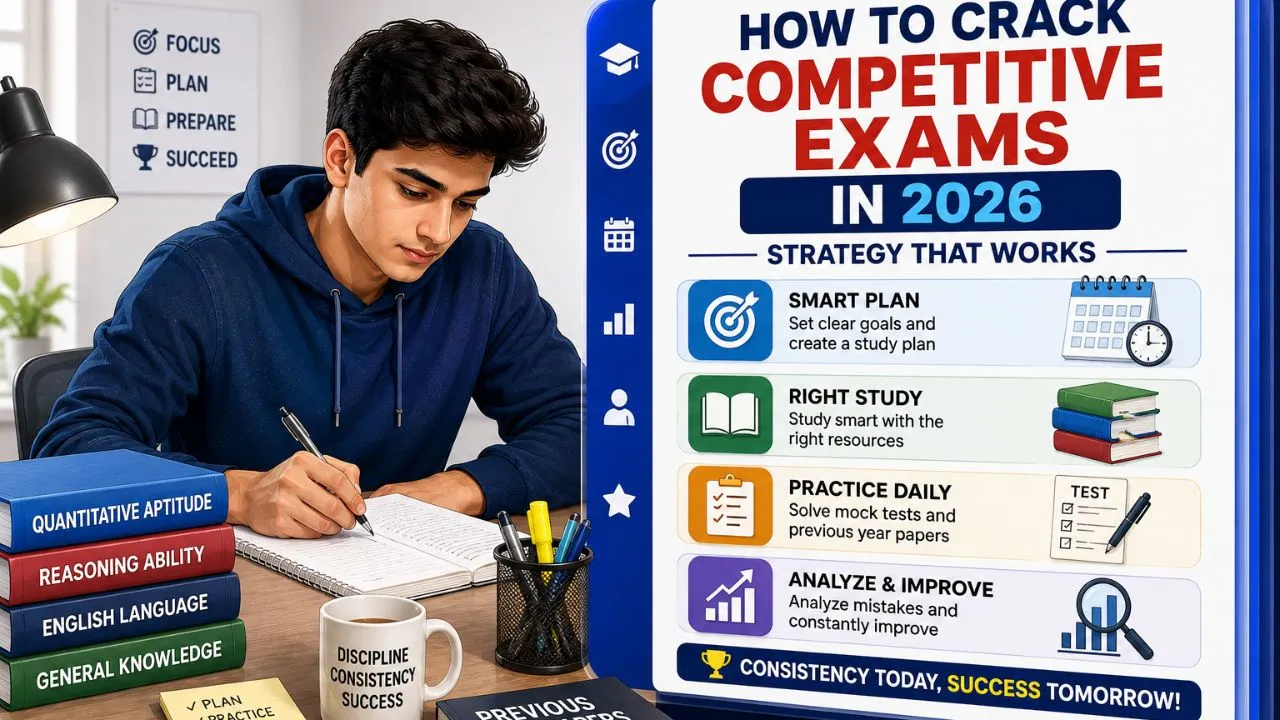
There is no secret shortcut for cracking competitive exams. A workable strategy is much simpler: understand the exam, divide the syllabus, study from limited sources, practise questions, analyse mistakes and revise repeatedly. Your daily schedule does not need to look perfect. It needs to be realistic enough to follow for months.
If you are preparing full-time for a government job, treat preparation like a regular commitment rather than something that depends on motivation. Some days will be productive. Others will not. The important thing is returning to the plan instead of allowing one unproductive day to become an unproductive week.For 2026, focus on building a preparation cycle that you can actually maintain: study, practise, test, analyse, revise, and repeat.