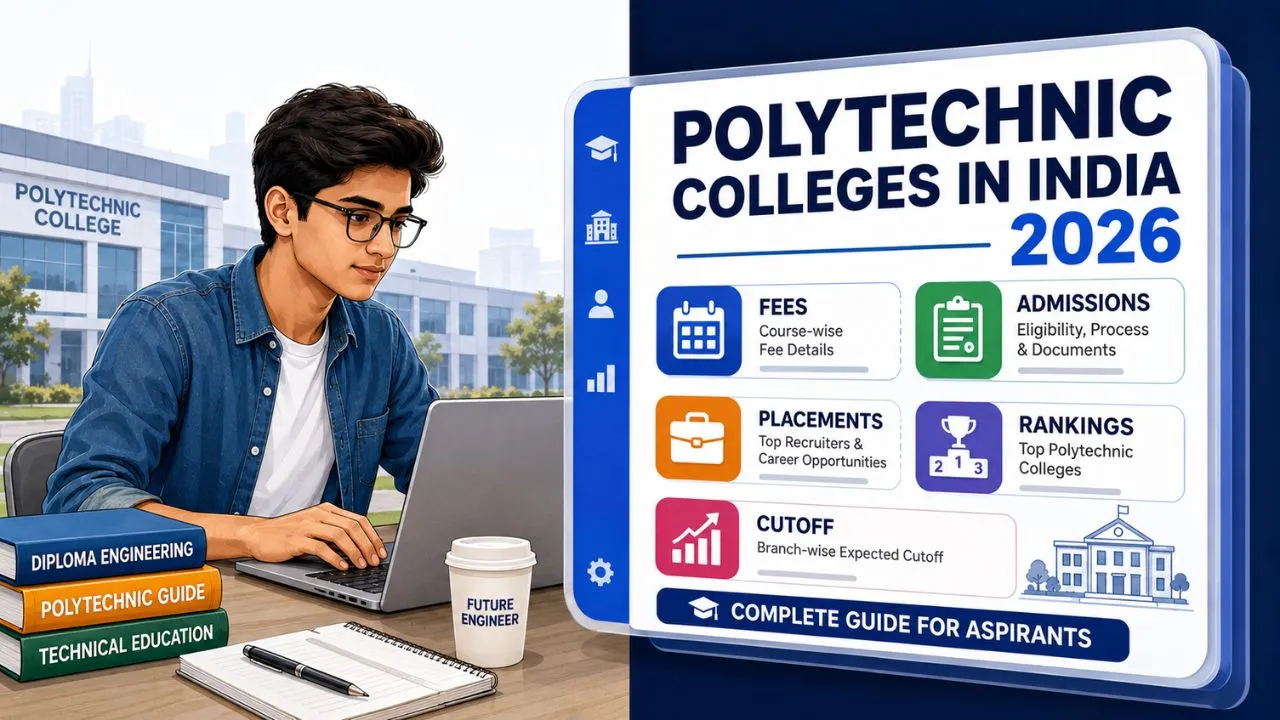
After Class 10, students who want to enter technical education have various options. A polytechnic diploma is one of them, that offers such students to study engineering and technical subjects without pursuing a four-year degree. But before applying for admission in Polytechnic Colleges in India 2026, students should check and know all the necessary details like the fees structure, admission procedure, placement opportunity, and other necessary information.
In this article, we will explain all the necessary things like admission, eligibility, fees, popular branches, placements, rankings and cutoff trends to consider before applying for a polytechnic course in 2026.
Table of Contents
Polytechnic Colleges in India 2026
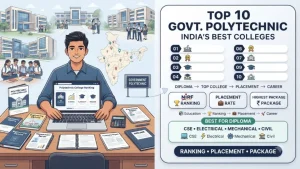
Polytechnic institutes offer diploma-level education in engineering and other technical fields. Most engineering diploma courses are available after Class 10 and generally take three years to complete. There are government and private polytechnic colleges across the country that offers both engineering and technical programmes. VJTI Mumbai, Jamia Millia Islamia, Aligarh Muslim University and Dr. Ambedkar Institute of Technology for Handicapped in Kanpur etc. are some well known Polytechnic institutions in India.
Government vs Private Polytechnic Colleges
Government polytechnic colleges are generally more affordable than private institutes. Whereas, private colleges generally have higher fees. Both government and private institutes provide faculty, practical training, hostel facilities, placement opportunities and better career options.
Polytechnic Fees in India
There is no fixed fee for polytechnic education across India. The amount depends on the state, college, course and whether the institute is government-run or privately managed. Government colleges offer low tuition fees, while private institutions may charge several lakh rupees for a complete diploma course.
Polytechnic Admission 2026
The admission process depends on the state and institution. Some colleges accept applicants through Class 10 merit, while others use entrance examinations followed by counselling. For example, in Uttar Pradesh, the JEECUP entrance exam is being conducted for polytechnic admissions. There are other separate entrance examinations in various states for admission in the Polytechnic Colleges.
The admission process involves registration process, filling out the application form and appearing for an entrance exam. Once the result is released, eligible applicants are called for counselling to select their preferred college and branch. Once all the process is completed, the students participate in the document verification round and pay the admission fee.
Polytechnic Eligibility Criteria
For many diploma engineering programmes, Class 10 is the basic qualification. The required subjects and minimum marks depend on the course and admission authority. Some programmes require specific eligibility for Mathematics, Science or other subjects. Entrance-based admissions can also have separate eligibility conditions.
Popular Polytechnic Branches
Computer Engineering and Computer Science are popular polytechnic branches among students interested in programming, software, websites and information technology. These courses typically involve subjects related to programming, computer systems, databases and networking.
Mechanical Engineering is another popular Polytechnic branch among the students. It gives the opportunity to the students interested in machines, manufacturing, production, workshop practices and industrial equipment.
Whereas another branch of polytechnic, Civil Engineering focuses on areas such as construction, surveying, structures, roads and infrastructure. While Electrical Engineering covers electrical systems, machines, power and related equipment.
Electronics and Communication Engineering deals with electronic systems, communication technologies and related technical applications.
Polytechnic Placements and Career Options
Placement opportunities differ considerably between colleges and branches. Recruiters looking for computer-related skills may not hire for the same roles as companies working in manufacturing, construction or electrical systems.
Personal skills matter as well. Practical knowledge, internships, technical skills and communication can make a difference when applying for jobs. A diploma does not limit a graduate to campus placements. Private technical jobs, apprenticeships, government recruitment and further education are some of the available routes.
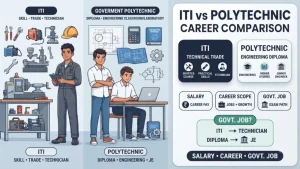
Diploma holders can also pursue B.Tech or B.E. through lateral entry where the applicable rules allow it. This route can let eligible diploma holders enter an engineering degree programme at an advanced stage rather than starting from the first year.
Polytechnic Cutoff 2026
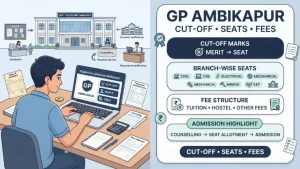
There is no single cutoff for all polytechnic admissions in India. The closing score or rank depends on the state, college, branch, category, number of seats and level of competition. For entrance-based admissions, rank is particularly important during counselling. A popular branch at a government college may close earlier than a less competitive course.
The terms marks, rank and cutoff are also different. Marks refer to the score obtained in an examination, while rank shows a candidate’s position among other applicants. The cutoff is generally the point at which admission closes for a particular course, college or category.
How to Choose a Polytechnic College
Start with the branch rather than the college name. Once the preferred course is clear, shortlist institutes that offer it and check their admission requirements.
Next, compare government and private options based on the complete cost. If two colleges have similar academic offerings, the one with lower hostel and travel expenses may make more sense financially.
Previous cutoff trends can help with college preferences, but they should not be treated as guaranteed admission figures.
Placement information also needs careful checking. Look at the companies that actually recruited, the branches covered and the type of roles offered instead of relying only on broad claims about packages.
Before applying, check the institute’s current affiliation, approval, course availability, seat intake and admission rules. These details can change between admission cycles.
Final Words
Choosing a polytechnic college is not only about finding the lowest fee or the biggest college name. Students should also look for the branch, admission route, practical training, total cost and career options available after completing the course.
Before applying for the 2026 session, students should check the latest rules for their state and preferred college. Fees, eligibility, seats, counselling procedures and cutoffs also keep changing from admission cycle to another.