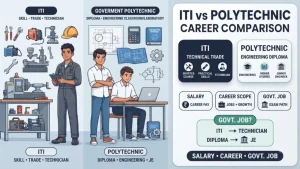
After Class 10, not every student wants to spend two more years studying a broad range of subjects before moving into technical education. A polytechnic diploma offers another route, with more focus on engineering, technology and practical skills from the beginning.
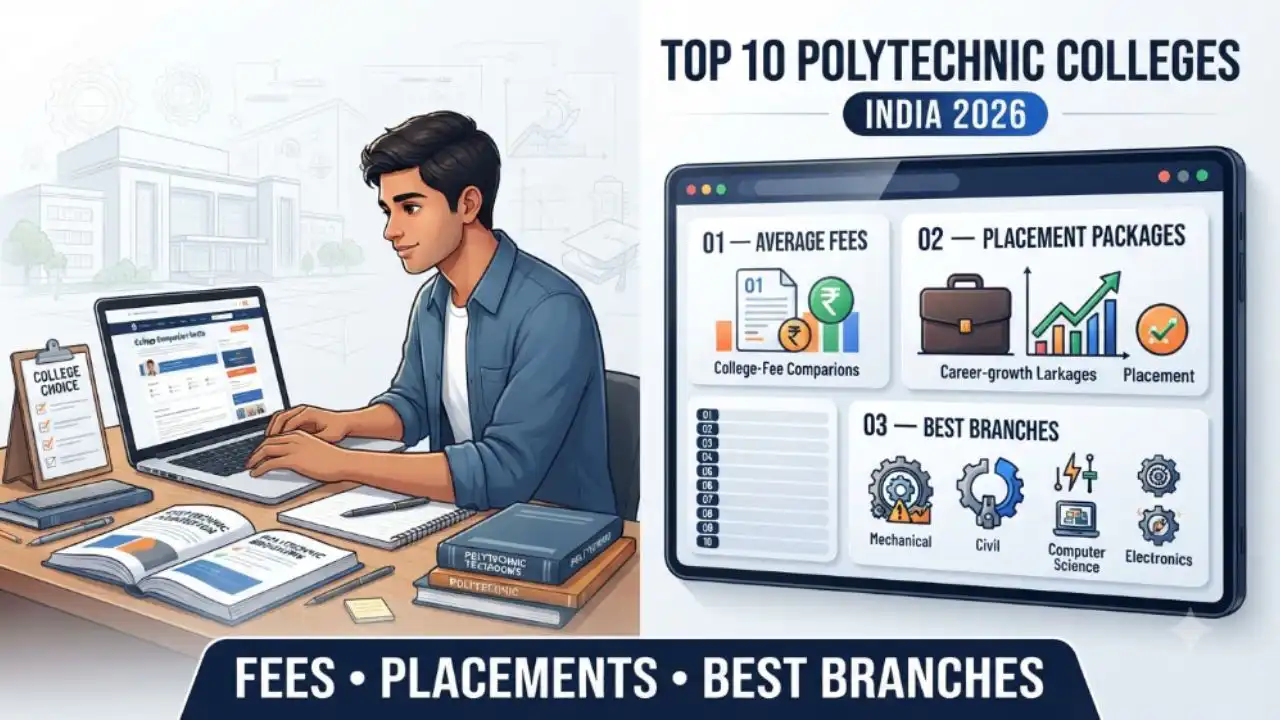
The choice of college matters, though. Fees, branches, laboratories, industry exposure, placement support and location can all affect your experience. A low-fee college may be a better option for one student, while another may prefer a private institute with more facilities. This guide covers Top 10 Polytechnic Colleges in India, their approximate fee levels, popular branches, admission routes, placement prospects and options after completing a diploma.
Table of Contents
Top 10 Polytechnic Colleges in India
There is no single official ranking that places every polytechnic college in India from first to tenth. Colleges are better compared through factors such as reputation, government or private status, course options, infrastructure, practical training and placement record.
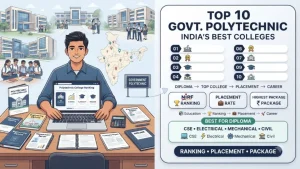
The following institutions are considered as the Top 10 Polytechnic Colleges in India:
- Government Polytechnic Mumbai
- Government Polytechnic Pune
- Pusa Institute of Technology, Delhi
- Government Polytechnic Ahmedabad
- PSG Polytechnic College, Coimbatore
- Government Polytechnic Lucknow
- Government Polytechnic colleges across major state technical education systems
- State-run diploma institutes affiliated with recognised technical boards
- Established private polytechnic institutes with strong industry connections
- Polytechnic colleges attached to established technical education groups
The exact choice should depend on the branch you want, your budget and the admission options available in your state.
Government vs Private Polytechnic Colleges
Government polytechnic colleges are generally more affordable. They can be particularly useful for families looking for technical education without the higher tuition fees charged by many private institutes.
Private colleges can have different fee structures and facilities. Some provide modern laboratories, industry partnerships and campus placement support, while the quality varies from one institution to another.
Average Polytechnic Fees in India
Government institutes generally have lower tuition costs, with annual fees often falling around ₹8,000 to ₹30,000. Private polytechnic colleges can cost considerably more, with annual fees commonly ranging from around ₹30,000 to ₹1.5 lakh or higher.
Students may also need to pay for examination charges, admission fees, laboratory expenses, books, uniforms, transport, hostel accommodation and food. Someone moving to another city can therefore spend much more than the advertised course fee.
Scholarships can reduce the burden for eligible students. State scholarship schemes, merit-based assistance and category-based support are some options worth checking before admission.
Admission to Polytechnic Courses
The admission process depends on the state and institution. Some colleges admit students based on Class 10 marks, while others use state-level entrance examinations followed by counselling. There are also institutions with their own admission procedures.
Popular state-level entrance routes include JEECUP in Uttar Pradesh, AP POLYCET in Andhra Pradesh, TS POLYCET in Telangana, Bihar DCECE and JEXPO in West Bengal.
For most diploma engineering programmes after Class 10, Mathematics and Science are important subjects. The minimum marks and other eligibility requirements differ by course and state. Before applying, students should check the latest notification for your state instead of relying on an older admission schedule.
Best Polytechnic Branches
The branch you choose can influence the subjects you study, internships you pursue and the type of work available after graduation.
Computer Engineering
Computer Engineering is a popular option for students interested in programming, networking, databases and software-related work.
A diploma alone does not guarantee a software job. Practical projects, coding skills and additional training can make a significant difference.
Mechanical Engineering
Mechanical Engineering suits students interested in machines, manufacturing, production and maintenance.
Possible roles include technician, production supervisor, CAD-related positions and maintenance roles across manufacturing and industrial companies.
Civil Engineering
Civil Engineering focuses on construction, surveying, structures, roads and infrastructure.
Diploma holders can explore work with construction companies, contractors, infrastructure firms and government-related technical departments, depending on eligibility.
Electrical Engineering
Electrical Engineering covers power systems, electrical machines, wiring, industrial equipment and maintenance.
The field offers opportunities in manufacturing, power, infrastructure and electrical service work.
Electronics and Communication Engineering
This branch covers electronic systems, communication technology, circuits and related equipment.
Students interested in embedded systems, electronics manufacturing, telecommunications and networking can consider this option.
Automobile Engineering
Automobile Engineering focuses on vehicle systems, maintenance, manufacturing and servicing. The growth of electric vehicles is also creating new areas of technical work around EV systems and servicing.
Polytechnic Placements and Salary
The placement results vary from one college and branch to another, so a single salary figure cannot represent every diploma graduate. A fresher may start in roles such as technician, junior engineer, site supervisor, maintenance trainee, production assistant or technical support staff. The actual salary depends on the employer, location, branch, skills and job responsibilities.
Recruiters in manufacturing, automobile, construction, engineering, IT support and other sectors hire diploma holders. Companies such as Tata Motors, Larsen & Toubro, Bosch, Maruti Suzuki, Mahindra & Mahindra, BHEL and other employers are associated with technical recruitment, but recruitment is not guaranteed at every polytechnic college.
Career Options After Polytechnic
A diploma does not mean you have to start working immediately. One route is direct employment. Technical jobs can provide early industry exposure and practical experience. Another option is government recruitment. Depending on the qualification and recruitment notification, diploma holders can find opportunities in areas such as Railways, public works, electricity departments, defence organisations and public sector organisations.
Lateral Entry into B.Tech
Students who want to continue their education can explore lateral entry into B.Tech or B.E. programmes where the applicable state or university rules allow it. Through this route, eligible diploma holders can enter an engineering degree programme at an advanced level instead of starting from the first year. Admission rules, entrance requirements and available seats vary by state and institution.
Starting a Business
Technical experience can also be useful for self-employment. Depending on the branch, a graduate might eventually work independently through an automobile workshop, electrical service business, fabrication unit, computer repair centre or construction-related service. This route requires practical experience, financial planning and the necessary licences or registrations where applicable.
Final Words
A polytechnic diploma can be a practical route into technical education after Class 10. It gives students an opportunity to develop branch-specific skills and explore employment, government recruitment or higher education later. The Top 10 Polytechnic Colleges in India cannot be ranked on fees alone. A college that fits your budget, preferred branch, location and career plans can be a better choice than an institution with a stronger name but fewer advantages for your situation.
Before applying for 2026 admission, check the latest eligibility rules, fees, counselling process and placement information directly through the relevant college or state admission authority.